



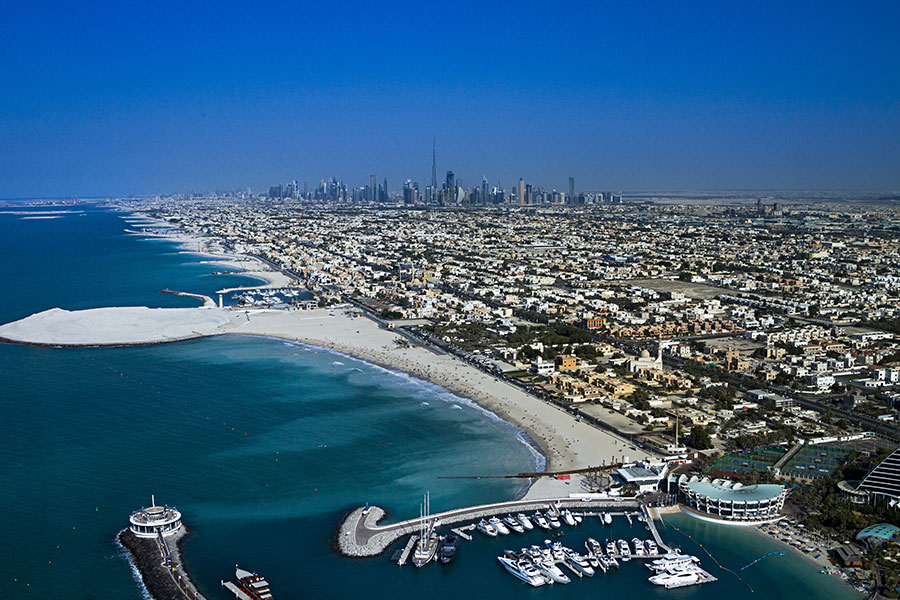
I know of many Pakistani and other South Asian businesses who have built significant operations in the GCC over the past three or four decades. For many of them, the Gulf offered something rare in this region. International scale, opportunity to derisk from their volatile native environments, and a perception of political stability.
The economic rise of the Gulf was built on three pillars: open trade routes, predictable internal political environments, and the belief that the region sat somewhat above the geopolitical turbulence surrounding it.
Today, that perception is under strain.
The wider Middle East appears to be entering a period of deeper structural instability. The ongoing confrontation involving Israel has introduced a level of volatility that may not dissipate quickly, even if the present war ends soon.
Even if Gulf countries are not directly involved, the spillover effects we are watching now particularly on shipping routes, logistics networks, and energy infrastructure are real.
At the same time, competition within the Gulf itself has become more visible. Rivalries between major GCC economies are increasingly playing out beyond their borders, particularly along the Red Sea and the East African coast.
Ports, logistics corridors, and political alliances are now part of a wider contest for regional influence. A friend remarked, “They (GCC countries) are all trying to play above their pay grades!”
However, the implications are not the same for every industry.
If you operate in technology and high finance, leveraging access to global talent, strong digital infrastructure, and serving international markets, the GCC can still be an attractive base. In many ways, the region’s ambition to build knowledge economies strengthens that case.
But if your business is tied closely to manufacturing, supply chains, trading, logistics, and primarily serves regional markets, the calculus may be different. In these sectors, exposure to geopolitical friction, maritime disruption, and shifting regional alliances can quickly become material risks.
None of this makes the GCC an unattractive place to do business at this point. But the risk equation has clearly changed!
For companies operating there, geopolitical risk can no longer be treated as background noise. It is becoming a strategic variable, one that deserves the same attention as market growth, competition, regulation, and capital allocation.
The real question for businesses is simple. Are we still making decisions based on the old assumption of Gulf stability?
Worth thinking about 🤔


Recent News

Winning the Argument, Losing the Respect:
19th April 2025
Why So Many People Feel Stuck
16th January 2026