



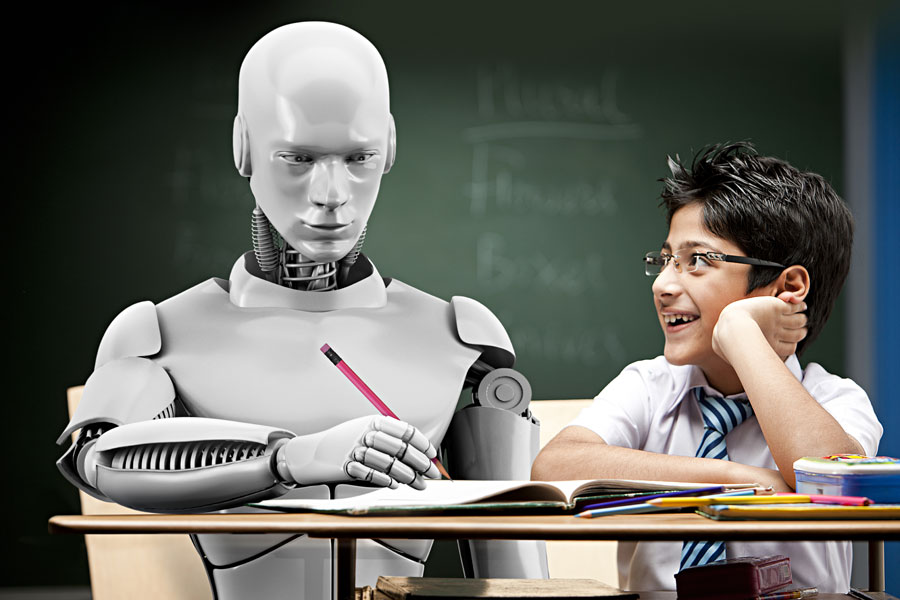
I have been trying to educate myself about AI and, like many non-technical people, I sometimes struggle to separate the hype from the reality.
At first, I thought of AI as the next Internet.
For my generation, the Internet was the defining technology of our time. It transformed access to information, enabled global communication, and created entirely new ways of doing business. Much of the last three decades has been about building applications on top of that foundation.
But the more I think about it, the less convinced I am that AI is simply another version of the Internet.
In some ways, it may be closer to electricity.
Electricity did not create just one industry. It transformed every industry. Companies did not need to become electricity companies; they simply learned how to use electricity better than their competitors.
Perhaps AI will follow a similar path.
What is particularly interesting is that many of the ideas behind AI are not new. Machine learning, neural networks, and related concepts have existed for decades.
What has changed is the availability of enormous computing power and data, allowing machines to perform tasks that were previously impossible.
This may explain why the real opportunity is not AI itself, but what we do with it.
Most organizations will never build their own frontier AI models. Just as most companies do not generate their own electricity, they will consume AI capabilities created by others and apply them to solve business problems.
The race, therefore, may not be to build AI. The race may be to identify the most valuable use cases for AI.
Much of the disruption we are seeing today is occurring in the software and IT services industries. AI can write code, test software, answer customer queries, draft reports, analyse contracts, support accounting functions, and perform many tasks that once required highly specialised expertise.
As technology becomes easier to create, value shifts elsewhere. The scarce resource is no longer the ability to build tools. The scarce resource becomes the ability to identify problems worth solving.
In that world, domain expertise, judgment, creativity, communication, leadership, and critical thinking become more valuable, not less.
Which brings us to the traditional IT profession and education.
For decades, education rewarded the acquisition of knowledge and mastery of procedures. AI is becoming increasingly capable of both. The future may place greater value on the ability to ask better questions, frame better problems, and apply knowledge in novel situations.
The Industrial Revolution amplified human muscle. The Internet amplified human communication. AI may become the technology that amplifies human cognition.
If that proves true, then perhaps the most important challenge is not learning AI. It is learning how to create value in a world where ‘intelligence’ as we know it today, is becoming abundant.


Recent News

You Cannot Play the Outcome
9th October 2026
Winning the Argument, Losing the Respect:
19th April 2025